Medical congresses remain key spaces for scientific exchange. But the way information is presented is changing.
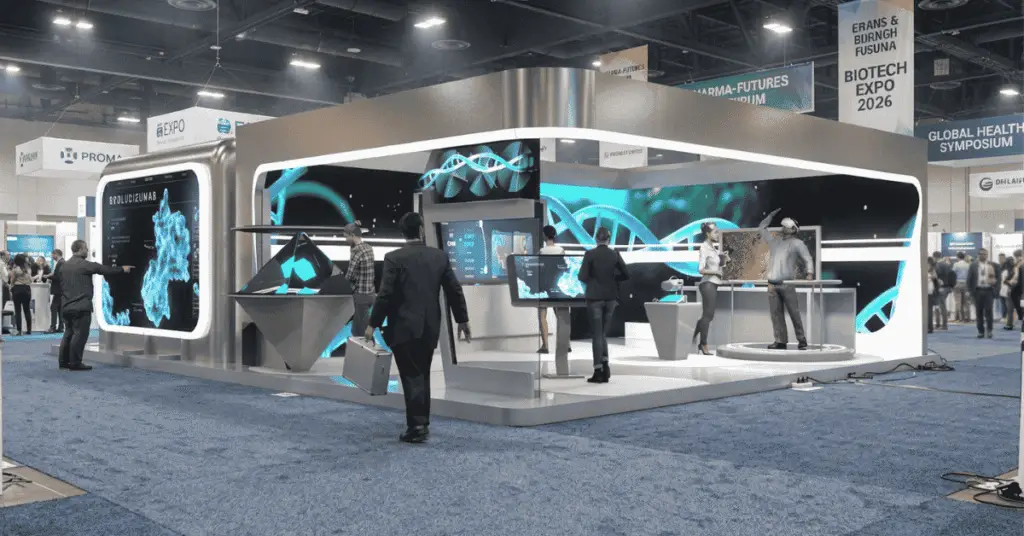
For years, booths with large screens and immersive experiences have aimed to capture attention. They work… at first. But they come with clear limitations: compatibility issues across different booth setups, limited use beyond the congress itself, and a strong dependence on internet connectivity.
Today, the focus is shifting toward something else: versatile materials that work just as well at the booth, during Medical Science Liaison (MSL) visits, or in follow-up meetings.
The Challenge
Traditional approaches often required significant investment in complex installations, without guaranteeing better scientific communication.
Now, Medical Affairs teams need something different: clear ways to communicate complex data, while optimizing resources and reusing content across multiple settings.
Strategic Evolution: A Three-Phase Approach
Phase 1: Static Foundation
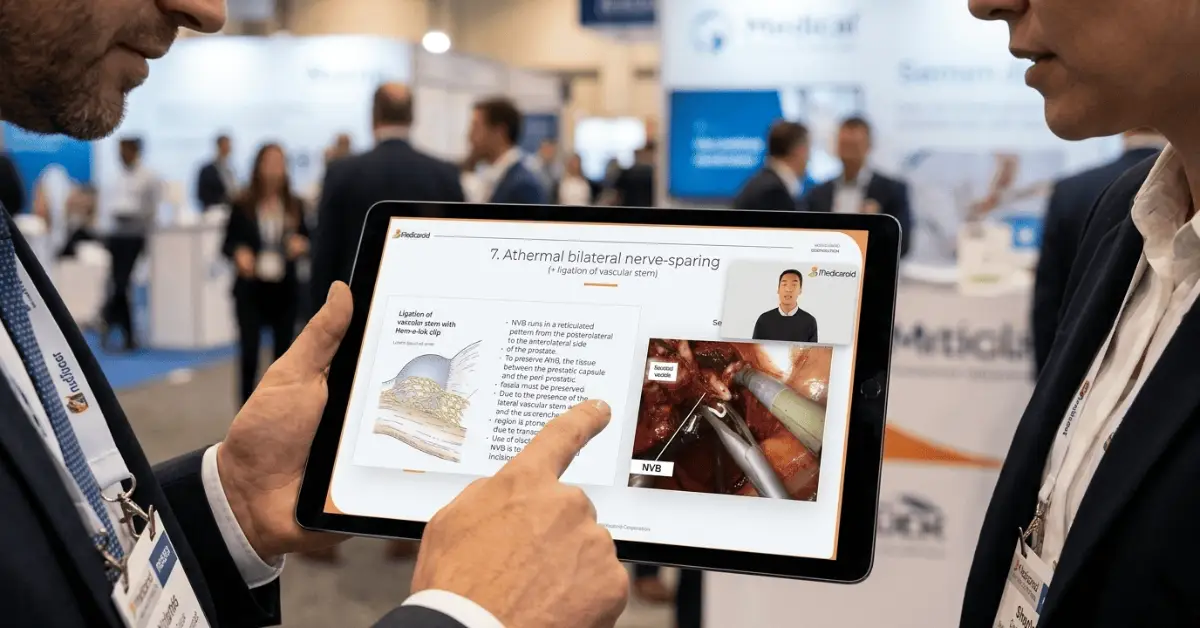
Everything starts with static infographics that act as conversation starters.
They allow teams to:
– Translate complex data into clear visual stories.
– Guide focused scientific discussions.
– Enable meaningful interactions with Healthcare Professionals (HCPs).
– Reduce initial investment.
Phase 2: Digital Enhancement
When an infographic proves effective, it can be taken to the next level.
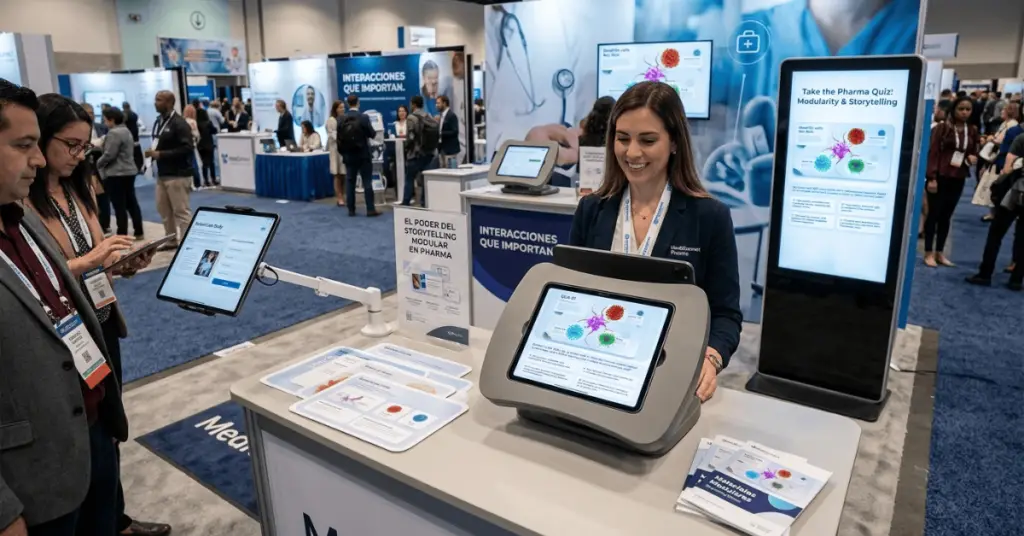
Interactive versions allow teams to:
– Explore content more intuitively through touchscreens.
– Dive deeper into mechanisms of action or biological processes.
– Keep static versions as backup, depending on the conversation.
Phase 3: Advanced Features
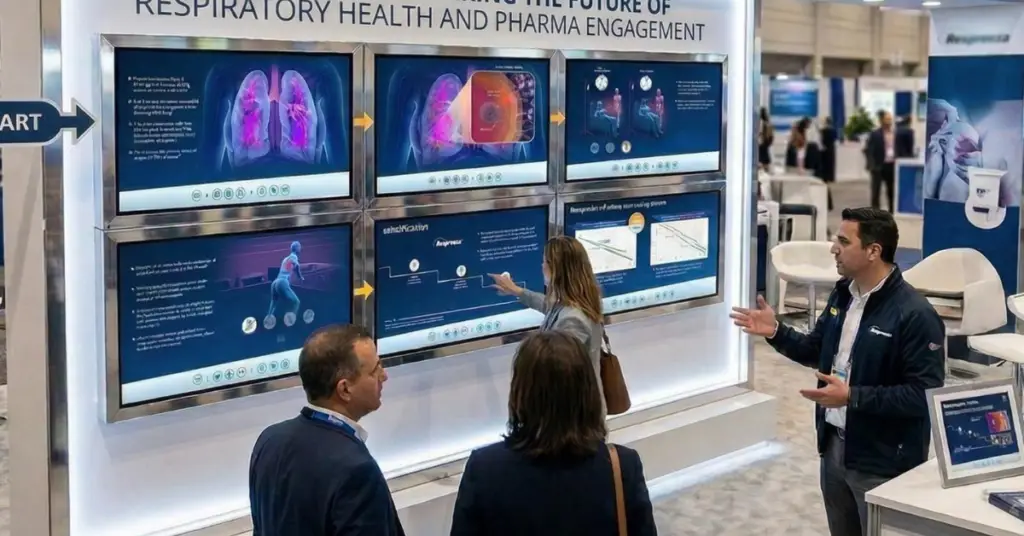
From there, storytelling capabilities expand:
– Voice-over integration.
– Inclusion of videos or animations.
– More dynamic visual sequences.
– Interactive elements to reinforce learning.
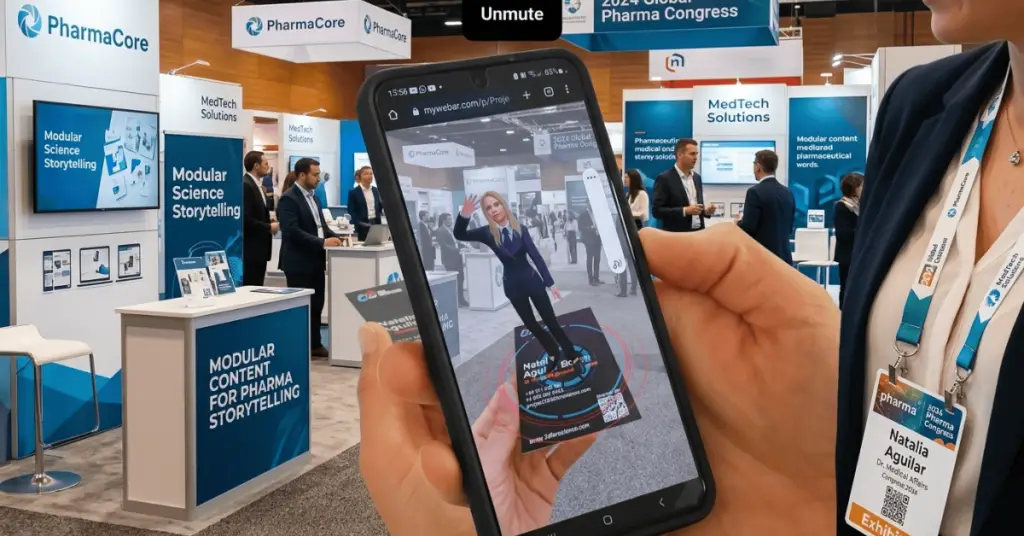
Why This Approach Works
The key is not the technology itself, but how it is used.
This model enables:
- Scientific clarity
Turning complex data into understandable messages. - Flexibility
Adapting content to different moments and channels. - Efficiency
Building on what already works and scaling it. - Versatility
Reusing materials across multiple formats. - Scientific rigor
Maintaining accuracy at all times.
Implementation Recommendations
Start with core scientific messages and build them into clear visual formats.
Prioritize quality of communication over technological “wow effect”.
Design materials for both static and interactive use.
Plan for different presentation scenarios.
Create modular content that is easy to update.
Looking Ahead
The future of congress materials is not about adding more technology without purpose.
It is about building visual stories that truly connect with healthcare professionals.
Starting with a strong infographic foundation and evolving strategically toward interactive experiences allows teams to create a more effective and sustainable congress presence.
Ready to Improve Your Congress Communication?
At 3DforScience , we design visual experiences—both static and interactive—that help communicate complex science in a clear and memorable way.