In healthcare and life sciences, innovation does not succeed because it exists. It succeeds when people understand it, trust it and know how to use it.
There is a familiar rhythm to innovation in healthcare and life sciences. A team identifies an unmet need. Researchers and engineers wrestle with the science. Regulatory, clinical and commercial teams work through the evidence, documentation and approvals. Eventually, after years of effort, a product, platform or service is ready for the market.
But that is not the finish line. In many ways, it is only the first step.
For a healthcare innovation to make a meaningful difference, people need to adopt it. Investors need to see the commercial and clinical logic. Healthcare systems need to understand the value case. Healthcare professionals need confidence in how it works and where it fits. Patients need clear, credible information about what it means for them. Even the most transformational solution will struggle to get far if the people around it are not engaged, convinced and equipped to act.
Innovation needs an education strategy
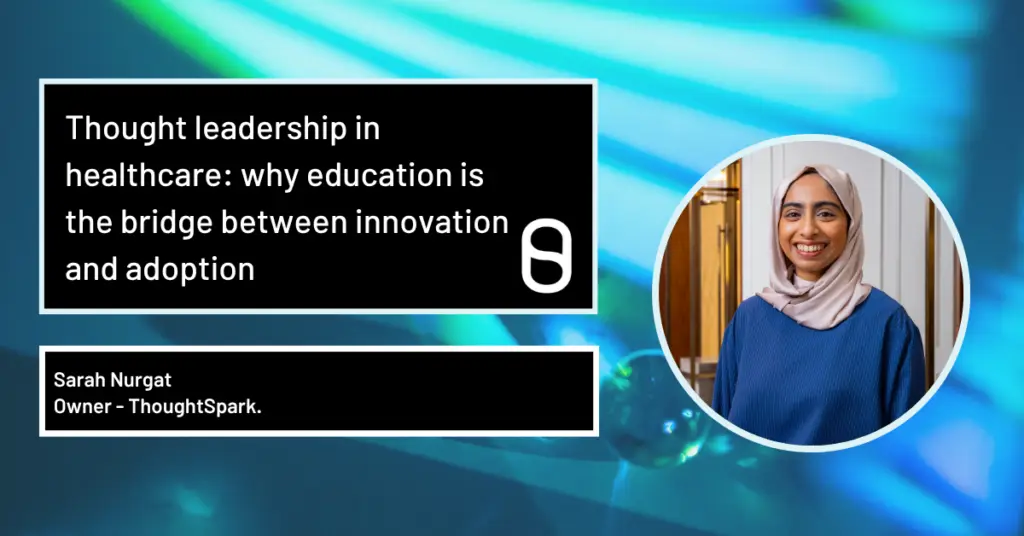
Thought leadership is often treated as a reputation exercise: a way to raise visibility, secure media coverage or give senior leaders something useful to say on LinkedIn. It can do all of those things. But in healthcare and life sciences, its deeper value is educational.
Healthcare decisions are rarely simple or immediate. They involve evidence, risk, procurement, regulation, clinical workflows, patient experience and cost. A single product announcement cannot carry that complexity. Nor can a product brochure. Thought leadership creates the space to explain the problem, explore the context, test assumptions, share evidence and answer the questions that different audiences
are already asking.
That education cannot be a one-off campaign. Products evolve. Markets evolve. Stakeholder priorities change. New data emerges. Competitors make claims. Regulation shifts. A strong thought leadership programme helps an organisation keep educating the market over time, while also learning from the questions, concerns and objections that come back.

What education-led thought leadership looks like in practice
At ThoughtSpark, much of our work sits in this space: turning complex healthcare and life sciences topics into content that helps audiences understand what is changing, why it matters and what it could mean for them. Here are some examples of recent projects.
- We collated feedback from radiology professionals on photon-counting CT scanners, shaping their views into an in-depth report on use cases, benefits and real-world relevance.
- We explored alternatives to single-use drug delivery devices in the context of increasing plastic demand and pressure on material reserves, helping to frame sustainability as a long-term resilience issue as well as an environmental one.
- We presented the challenges of complex biologic drugs and vaccines for safe drug delivery, translating technical and regulatory issues into a clearer narrative for industry audiences.
- We ran a newsletter campaign seeking “unsung heroes” in femtech, aiming to spotlight the people behind meaningful innovation in women’s health.
These examples are different in format and audience, but they share the same principle. They help readers to gain and increase awareness of a specific issue.

Thought leadership as part of the marketing engine
Thought leadership works best when it is not treated as an isolated article or occasional campaign. It should sit inside a wider marketing and communications strategy, with a clear role at each stage of the journey.
Strong content can be repurposed for maximum impact. It can be amplified through corporate and personal LinkedIn channels, including paid support where the audience is specific and valuable.
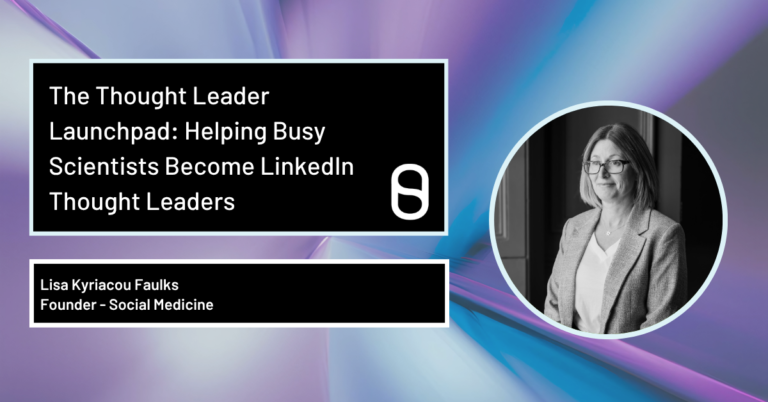
In fact, thought leadership from a person – a founder, clinician, scientist, commercial lead or subject-matter expert with something genuinely useful to say – can drive greater engagement (and this is proven, as Lisa discusses here), perhaps because they feel less like an advert and more like a helpful contribution to an ongoing professional conversation.
Thought leadership is also a means of capturing new contacts, through newsletter subscriptions, gated reports or webinar sign-ups. These contacts can then be nurtured through regular, insight-led communication. And, eventually, this creates warmer openings for commercial teams because the conversation starts with a shared issue, not a cold sales message.
This is especially important in high-value B2B healthcare, where decisions are relationship-led and often involve multiple stakeholders. The aim is not to chase vanity metrics or treat every reaction as a lead. The aim is to build a community of practice: an audience that recognises your expertise, returns to your thinking and is more willing to enter a serious conversation when the timing is right.
The real value: helping the market move
Healthcare innovation often asks people to change how they think, work, buy, prescribe, invest or receive care. That kind of change takes more than visibility. It takes explanation, evidence and trust.
That is why thought leadership matters. Not because every company needs more content, but because the best healthcare ideas need people to understand them before they can benefit from them.
Regulatory approval may open the door. Education is what helps the market walk through it.

Connect with Sarah on LinkedIn and share your thoughts on this post. Did the ideas resonate? What is your top takeaway? Let us know!
ThoughtSpark is a boutique PR and content marketing agency that helps organisations grow their visibility through strategic content, public relations and digital marketing. They specialise in creating research-led, multilingual content for businesses across sectors including healthcare, technology, finance and life sciences, with services ranging from thought leadership and social media to investor relations and global PR campaigns.